
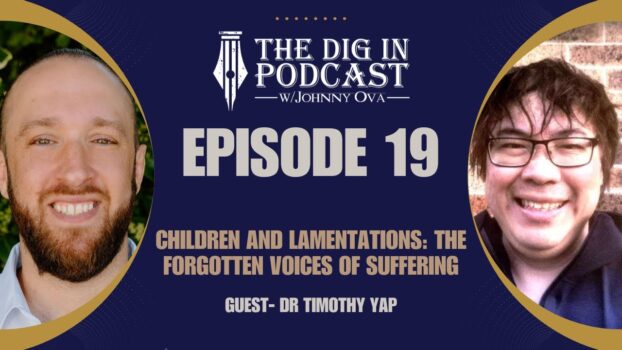
When we think about the Book of Lamentations, most of us skip right past it. It’s uncomfortable, dark, and doesn’t fit neatly into our Sunday morning sermon series. But what if this ancient text holds some of the most profound insights into suffering, resilience, and God’s presence in the midst of devastating loss? Dr. Timothy Yap, an Old Testament scholar from Australia and lecturer at Olivet College, has spent years studying the often-overlooked voices in Scripture, and his research on children in Lamentations reveals a side of biblical scholarship that could transform how we pastor people through trauma, grief, and the hardest questions of faith.
In this powerful conversation, Dr. Yap unpacks how the portrayal of children in this neglected book isn’t just about ancient history. It’s a roadmap for understanding God-centered grief, the devastating reality of sin’s consequences, and why the most vulnerable voices in Scripture demand our attention today.
The Book Nobody Wants to Preach: Understanding Lamentations
The Hebrew word for Lamentations is “Eikah,” which simply means “how.” It’s the anguished cry that opens the book. How did this happen? How did Jerusalem fall? How could God allow this?
Dr. Yap explains that Lamentations belongs to the Ketuvim (the Writings) in the Hebrew canon and is one of the five Megilloth (scrolls) read during Jewish festivals. Specifically, it’s read on Tisha B’Av (the ninth of Av), the day when Jewish people remember the destruction of both Solomon’s temple and the Second Temple, both of which fell on the same date centuries apart.
“This is a book that’s being read because it remembers the time whereby Jerusalem was being conquered and the temple was being destroyed,” Dr. Yap notes. The book comprises five psalms of lament that allowed God’s people to express their despair, anger, frustration, hurt, and sadness directly to God.
Why This Matters for Modern Christians
The Book of Lamentations resonates powerfully with our current cultural moment because we too experience the ravages of sin, seasons of profound sadness, and times when God feels absent. The Bible doesn’t erase these experiences. It treasures them and provides a framework for bringing them before God.
“The Bible doesn’t erase those times and treasures those times and allows us opportunities to present them to God,” Dr. Yap emphasizes. This isn’t just ancient poetry. It’s a theological permission slip to bring our darkest moments into God’s presence without pretense or spiritual performance.
God Knows the Details: Different Words for Different Ages
One of Dr. Yap’s most fascinating discoveries involves how Lamentations uses specific Hebrew words for different age groups of children. This isn’t the Bible taking a one-size-fits-all approach to childhood suffering.
“The Bible uses different words to describe different age of children,” he explains. “There is a specific word for infants that the book of Lamentations uses and a little bit older children in the book of Lamentations.”
The Sociological Significance
This challenges a common academic assumption that the concept of developmental stages (like teenagers versus young children) is a modern invention. Dr. Yap pushes back: “Sociologists often tell us that the word teenage or teenager only came later in history. That there is a differentiation between teenagers and children much later in history. But that’s not really true.”
The biblical text itself makes these distinctions, showing that God pays specific attention to different age groups and understands what each developmental stage requires. This isn’t blanket theology. It’s precise, caring attention to the unique vulnerabilities and experiences of children at different life stages.
What this means for pastors and church leaders:
- Child abuse is particularly heinous because childhood is such a vulnerable stage
- The Bible recognizes that different ages require different care and protection
- God places a premium on children and knows what each age group needs
- Our children’s ministries should reflect this biblical attention to developmental needs
Chapter 4: The Heart of Childhood Suffering
Lamentations Chapter 4 stands out as the most detailed portrait of children’s suffering in the entire book. Dr. Yap calls it his favorite chapter because of the meticulous attention the writer gives to describing children’s experiences during the Babylonian siege of Jerusalem.
The Siege Context
Before Jerusalem fell in 586-587 BC, the city was besieged by the Babylonians for one and a half to two years. Imagine not being able to leave your city, with an enemy army surrounding you, cutting off all food and water supplies. This is the horrifying backdrop against which the children’s experiences are painted.
“If your siege goes long enough, you won’t be able to bring food from outside the country into the city. So your food runs out, your water runs out,” Dr. Yap explains. Chapter 5 even mentions that people had to pay to purchase water, something that seemed unthinkable in ancient times but has eerie parallels to our own modern water crisis.
The Pictorial Nature of Chapter 4
What makes Chapter 4 so powerful is its almost cinematic quality. It’s like watching a video unfold as the writer describes:
1. Infants with parched tongues
- Lamentations 4:4 describes the tongue of infants stuck to the roof of their mouths from thirst
- Even babies could feel the desperate thirst during the siege
- This specific Hebrew word for infants shows God’s attention to the youngest victims
2. Older children begging for food
- Children who could speak and run were begging neighbors for food
- They were being turned down despite their desperate pleas
- The text captures their active search for survival
3. Socioeconomic differences among children
- Rich children who once ate delicacies were now searching through rubbish bins
- Children dressed in scarlet (a sign of wealth) were digging through ash heaps for food
- The siege was a great equalizer, bringing all children to the same desperate state
“So not just the age groups, it talks about the social economic background of the different children and how there is this pictorial, like a video of the children running around and looking for food during this time. It’s heartbreaking, it’s a heartbreaking passage,” Dr. Yap reflects.
The Most Disturbing Image: Mothers and Children
Perhaps the most horrifying image in Lamentations is found in Chapter 4, where mothers resort to cooking and eating their own children. This isn’t just shock value. Dr. Yap explains that this is actually a fulfillment of Deuteronomy’s covenant curses.
Deuteronomy’s Prophetic Warning
The Book of Deuteronomy warned that if the people disobeyed God, they would face severe consequences, including siege conditions so desperate that people would turn to cannibalism. “This is just a fulfillment to say that God’s word is true,” Dr. Yap notes.
But there’s something deeper happening here. These stark images communicate the seriousness of sin and its cascading consequences. Sin doesn’t stay contained. It spreads into areas we never think possible.
Modern parallels Dr. Yap identifies:
- The Ukraine war, where 30,000 children have been separated from their parents
- Refugee crises where children are detached from families
- Famine-stricken regions where desperation leads to unthinkable choices
“Sin can make people do things unthinkable,” Dr. Yap warns. “Many times we justify sin by saying, it’s just a small issue. Let’s close one eye and that’s it. But sin actually permeates into areas that we never think it’s possible.”
Children as Active Survivors, Not Just Victims
One of Dr. Yap’s most important scholarly contributions is his argument that children in Lamentations are not merely helpless victims. They are active survivors showing resilience even in the worst circumstances.
The Role of Daughter Zion
The key to understanding children’s resilience is the image of Daughter Zion. Throughout Lamentations, the city of Jerusalem itself is personified as a daughter who suffers alongside the children.
“It’s as if God is saying to the readers that these children may be suffering, but they’re not alone. Zion suffers, the city itself suffers with the children,” Dr. Yap explains. In his published paper in the Journal for the Study of the Old Testament, he explores how Daughter Zion and the children function almost like siblings, suffering together.
The Contrast with Failed Mothers
While the biological mothers in Lamentations fail their children in the most catastrophic ways, Daughter Zion represents divine nurture. This creates a powerful theological message for our time:
“Your parents may fail you, but God being the parent will not.”
This isn’t just ancient theology. It’s a pastoral message for today’s broken families. For children who have experienced parental abandonment, abuse, or neglect, Lamentations offers the hope that God provides the nurture and protection that human parents sometimes cannot.
Hope Hidden in Despair: The Acrostic Structure
Many scholars claim that Lamentations is a book without hope, pointing only to the famous verse in Chapter 3 that inspired the hymn “Great Is Thy Faithfulness.” But Dr. Yap argues that hope is woven throughout the entire book in unexpected ways.
Jerusalem: Still God’s City
One of the most powerful expressions of hope is how Lamentations continues to describe Jerusalem with exalted language even after its destruction:
- The holy hill of God
- The holy city on the clouds
- The splendor of the world
“The Book of Lamentations maps it still in Jerusalem. Why? To show us that even though the city has been sacked, the city had been burnt down, it is still God’s city,” Dr. Yap explains.
This matters because it wasn’t the Babylonians who ultimately destroyed the city. It was God who allowed it. And if God allowed it, God can also rebuild it. The same principle applies to the suffering children.
The Acrostic Pattern: God’s Sovereign Structure
Four of the five poems in Lamentations are acrostic poems. Each line begins with a successive letter of the 22-letter Hebrew alphabet. Chapter 3 is triple acrostic with 66 verses (three lines per letter).
Why does this matter?
“It’s to say that though suffering happens, it is structured. That God has this structured. This is not out of God’s hands. God knows what he is doing,” Dr. Yap reveals.
Even in chaos, there is divine order. Even when children are suffering and dying, God hasn’t lost control. The very literary structure of Lamentations communicates that suffering doesn’t catch God by surprise.
“It’s as if God is saying, yes the children are suffering, but it’s not that I don’t notice. It’s still within my sovereign plan.”
The Three Tensions of Pastoral Counseling
One of the most practically valuable insights from our conversation came when discussing how to minister to people in suffering. Dr. Yap identifies three tensions that must be held simultaneously in pastoral care:
Tension 1: God Still Reigns
We cannot give into despair. Even in the darkest moments, we must affirm God’s sovereignty and eternal reign. Lamentations 5:19 declares: “You, Lord, reign forever. Your throne endures from generation to generation.”
Tension 2: Suffering Is Real
We must not give simple answers or deny the reality of pain. The same passage asks: “Why do you always forget us? Why do you forsake us so long?” This questioning is not silenced by Scripture. It’s validated and held in tension with God’s sovereignty.
Tension 3: Hope in Renewal
There must be prayer and expectation that God will restore: “Restore us to yourself, that we may return. Renew our days as of old.”
What happens when we let go of any one tension:
- Let go of God’s sovereignty = Hopelessness. “Your counseling session is just gone into the drain. Because what hope do you have?”
- Let go of suffering’s reality = Health and wealth prosperity gospel. “You are being very cruel to say that everything’s about health, wealth, and prosperity, but that’s not the promise of Scripture.”
- Let go of hope in Christ = Paganism. “We are just like pagans, no hope. So what if there is a distant God that is powerful? What does he do to me? Who cares?”
God-Centered Grief vs. Secular Grief
In our therapeutic culture, we’re told constantly to “talk about your feelings” and “process your grief.” But Dr. Yap argues that Lamentations models something fundamentally different from secular grief counseling.
How Secular Culture Handles Grief
- Focus on self-expression
- Therapeutic processing
- Letting go of hurt
- Moving forward
How Lamentations Handles Grief
- God-centered expression: All grief is directed toward God
- Theological processing: Understanding God’s role in suffering
- Letting go while holding on: Releasing bitterness while clinging to God
- Moving forward with God: Renewal through divine intervention, not just time
“The book of Lamentations doesn’t just talk about grief that way. It speaks about grief in a very God-centered way. It ties in grief to God,” Dr. Yap explains.
Practical example from the text: When Lamentations describes the destruction of Jerusalem’s roads, it doesn’t just mourn the physical damage. It mourns because these roads once carried people to worship at the temple. The grief is connected to God’s worship being destroyed.
“Teach our congregations to grieve, but teach them God-centered grief. How is my grief connected to God? And what is God’s role in my grief?”
The Danger of God-less Grief
Dr. Yap uses a powerful metaphor: “Grief can either make you stronger in your faith, or it can actually turn you away. It’s like the sun, the sun can melt an ice, or it can harden something that you leave outside.”
Without a God-centered view of suffering, grief becomes toxic:
- We become bitter toward people
- We close ourselves off from relationships
- We cannot process future suffering in healthy ways
- We turn into emotional monsters
“If you don’t have this God-centered view that is not the Babylonians that hurt you, but it’s God somehow allowing this to happen, if you don’t have that in your heart, then you become very bitter towards people.”
Pastoral vs. Theological Answers
In one of the most poignant moments of the interview, we discussed the difference between what suffering people need versus what we often give them. Picture a mother whose child has cancer asking, “Why would God allow this?”
What they’re NOT looking for:
- Theological explanations
- “The Lord gives and the Lord takes away” platitudes
- Answers that tie everything up neatly
What they ARE looking for:
- Shared grief
- Solidarity in suffering
- Someone to walk through the pain with them
- Pastoral presence, not just theological precision
“There are no specific answers in the Book of Lamentation,” Dr. Yap reminds us. “To stand with people and grieve with them. Why do you forget us? Why do you forsake us? There is that questioning which the Bible doesn’t silence and the book of Lamentations doesn’t silence.”
The Seriousness of Sin: A Warning for Today
If there’s one overarching message from Lamentations that Dr. Yap wants modern readers to grasp, it’s the devastating reach of sin.
We live in a culture that minimizes sin:
- “It’s just a small thing”
- “Everyone does it”
- “Let’s not be judgmental”
- “Close one eye and move on”
But Lamentations shows us where sin ultimately leads:
- A siege so dehumanizing that mothers eat children
- Children turning from delicacies to ash heaps
- The complete collapse of social order
- Suffering that reaches the most vulnerable first and hardest
“Sin has ways of reaching us that we never think is possible. So I think one of the great warnings is the dangers of sin. We need to avoid sin and why God is so uptight about sin.”
Modern Applications
Dr. Yap’s contemporary parallels:
- War zones where we think “it’s just about land,” but sin ensures children suffer most
- Refugee crises that separate 30,000+ children from parents (Ukraine example)
- Famine and poverty that force impossible choices on desperate people
- Family breakdown that leaves children vulnerable and abandoned
The lesson? Sin never stays contained. What we think is “just a small compromise” has ripple effects we cannot predict or control.
Dr. Yap’s Personal Journey with Lamentations
As both a scholar and believer, Dr. Yap’s research on Lamentations has deeply impacted his own spiritual life. He’s experienced the sting of rejection in academic circles where journal reviewers “tear you apart” and standards are impossibly high.
“Sometimes I feel so discouraged because, you know, they are so picky,” he admits with a laugh.
But Lamentations has taught him that he’s not alone in suffering. One of his colleagues reminds him: “Don’t feel sad when you are being rejected because our savior himself was being rejected.”
Reading Lamentations Through Jesus
This is crucial: We must read Lamentations in light of Jesus. While Daughter Zion stands with the suffering children in the Old Testament, the New Testament reveals an even greater reality.
“The Book of Lamentations teaches us that daughter Zion stands with the children, but the New Testament teaches us it’s not just daughter Zion, it’s Jesus Christ, God himself.”
Jesus embodies the message of Lamentations:
- He knows what it means to be abandoned (Psalm 22, Matthew 27:46)
- He experienced the full weight of sin’s consequences
- He suffered alongside the vulnerable
- He was rejected so we could be accepted
- He died to save us from the sin that causes all this suffering
Learning to Suffer Well
One of the reasons this topic gets neglected in churches is simple: it’s not fun. We love sermons about faith, blessing, and breakthrough. Those are exciting. But learning how to suffer well? That requires a maturity most of us would rather avoid.
“Learning to suffer well, learning to have this God-centered understanding of grief, seeing God in the midst of the storm, seeing God in the midst of the pain and the fires and trials and tribulations, I think is such an important part that will help us get past some of the struggles that we have with it,” I noted in our conversation.
The Spiritual Formation of Suffering
Suffering can transform us or embitter us. The difference is whether we have a God-centered framework for understanding it.
Questions to ask when suffering:
- How is my grief connected to God?
- What is God’s role in this pain?
- Can I hold the tension between God’s sovereignty and my suffering?
- Am I becoming bitter or being refined?
- Where do I see God’s presence, even when He feels absent?
Dr. Yap’s Challenge: Read Chapter 4 Again
If you take away one thing from this entire conversation, Dr. Yap wants it to be this: Go back and read Lamentations Chapter 4.
“Chapter four speaks about the children and the way the writer takes the time to describe the children and their suffering, their activities is very heartwarming. It shows that God is interested in details. So when you go through difficult times, God is interested in your details too.”
What to Look For in Chapter 4
Pay attention to:
- The specific vocabulary used for different ages
- The pictorial nature of the descriptions (almost like a video)
- The socioeconomic details (rich children in ash heaps)
- The acrostic structure (22 lines following the Hebrew alphabet)
- The theological message: God hasn’t forgotten, hasn’t been surprised, and hasn’t abandoned His people
Notice that God pays attention to every detail:
- What children are doing
- How they’re searching for food
- How they’re being rejected
- How their tongues stick to their mouths from thirst
- How they run through the streets begging
“He pays attention to how children are being referred to. He notices what children do, searching the ash heaps, going through, running in the streets, begging for food, but being rejected.”
Practical Applications for Pastors and Church Leaders
Based on this conversation, here are actionable takeaways for ministry:
1. Create Space for Lament in Your Worship
Don’t make every service triumphalistic. Sometimes God’s people need permission to grieve in God’s presence. Consider:
- Occasionally preaching from Lamentations
- Including lament psalms in worship
- Creating services specifically for those in grief
- Teaching your congregation that questioning God is biblical
2. Train Your Counseling Teams in God-Centered Grief
Move beyond secular therapeutic models. Teach counselors to:
- Hold the three tensions (God’s sovereignty, real suffering, hope in Christ)
- Connect every expression of grief back to God
- Avoid simple answers while maintaining hope
- Sit with people in their questions rather than rushing to resolve them
3. Protect Children as a Ministry Priority
Lamentations shows that children are particularly vulnerable during times of crisis. Your church should:
- Take child protection policies seriously
- Invest in quality children’s ministry
- Be aware of developmental stages and needs
- Create safe spaces for children dealing with trauma
- Train volunteers to recognize signs of abuse or neglect
4. Preach on the Seriousness of Sin
Don’t minimize sin to make people comfortable. Help your congregation understand:
- Sin has cascading consequences
- “Small” compromises lead to big destruction
- The most vulnerable (children, poor, marginalized) suffer first
- We need to take holiness seriously because God does
5. Teach About Suffering Before Crisis Hits
Don’t wait until someone is in crisis to develop a theology of suffering. Proactively teach:
- How to lament biblically
- Why God allows suffering
- How to find God in the midst of pain
- The difference between deserved consequences and general brokenness
- How Jesus redeems all suffering
6. Model Vulnerability in Your Own Suffering
Dr. Yap shared openly about academic rejection and difficult churches. Leaders who authentically share their struggles (without making it about them) give permission for others to do the same.
Warning Signs Your Grief Has Become Toxic
Based on Dr. Yap’s insights, watch for these red flags that grief has turned bitter:
- Isolation: “I’m not going to talk to anyone anymore because people have hurt me”
- Closed heart: Refusing to open yourself up to new relationships
- Bitterness toward God: Unable to see God’s sovereignty in suffering
- Blame shifting: Only seeing the “Babylonians” (external forces) rather than God’s permission
- Repeated patterns: Becoming bitter toward any similar situation that arises
- Loss of hope: No expectation that God will renew or restore
- Anger without lament: Rage that isn’t brought to God in prayer
The Gospel in Lamentations
Here’s the ultimate message: Lamentations points forward to Jesus.
While Daughter Zion suffers alongside the children of Jerusalem, Jesus suffers alongside all of humanity. While the acrostic structure shows God’s sovereign control over suffering, Jesus demonstrates God’s willingness to enter into that suffering personally.
“That’s the gospel that Jesus knows and Jesus knows the depth of sin and that we need saving. And that’s why he died to save us.”
The children’s suffering in Lamentations isn’t meaningless. It’s part of the great story arc of Scripture that shows:
- Sin’s devastation is real and horrible
- God doesn’t abandon His people in suffering
- God Himself enters the suffering through Christ
- Resurrection and renewal are always possible
- God’s sovereignty and human pain can coexist
- Hope is found not in denying pain but in trusting the God who sees it all
What to Watch For: Future Implications
As we face our own cultural moment with:
- Global conflicts displacing millions of children
- Economic inequality leaving children hungry
- Family breakdown creating generational trauma
- Mental health crises among young people
- Natural disasters and climate challenges
We need Lamentations more than ever. This isn’t just an ancient text about a siege in 586 BC. It’s a roadmap for:
- Understanding suffering theologically
- Pastoring people through trauma
- Maintaining hope without denying pain
- Recognizing God’s presence in absence
- Taking sin seriously before it reaches catastrophic levels
- Protecting the vulnerable before crisis hits
Resources and Next Steps
Don’t miss this profound conversation about one of Scripture’s most neglected books. Dr. Timothy Yap brings scholarly rigor and pastoral sensitivity to a topic that could transform how you understand suffering, grief, and God’s attention to the vulnerable.
Watch the full interview: Subscribe to The Dig In Podcast YouTube channel at https://www.youtube.com/@thejohnnyova for this and other deep-dive conversations that help Christians engage Scripture with greater depth, clarity, and curiosity.
Connect with Dr. Timothy Yap: Dr. Yap is a lecturer in Old Testament at Olivet College in Australia and specializes in neglected passages and minor characters in Scripture. His published work includes articles on children in Lamentations (Journal for the Study of the Old Testament), the fish in Jonah (Restoration Quarterly), and forthcoming work on hope in Lamentations and music in King Saul’s ministry. He’ll be presenting at the Evangelical Theological Society annual meeting in Boston in November 2025.
Learn more about Dr. Yap’s work: https://olivet.edu.au/timothy-yap
Connect with Johnny Ova: For more biblical deep dives and scholarly conversations that make Scripture come alive, connect with Johnny through:
- Subscribe to The Dig In Podcast: https://www.youtube.com/@thejohnnyova
- Follow all things Johnny: https://linktr.ee/johnnyova
- Read Johnny’s book, The Revelation Reset: https://a.co/d/hiUkW8H